


Squealing or Squeaking Noises
One of the first things most drivers notice is a high-pitched squealing sound when pressing the brake pedal. This noise is often caused by wear indicators built into the brake pads. These small metal tabs are designed to contact the rotor when the pad material wears thin, creating that distinctive squeal as a warning. If you hear this sound consistently, it’s time to have your brakes inspected.
Grinding When You Brake
If squealing goes unaddressed, it can progress to a grinding sensation or sound. This typically means the brake pad material has worn away completely, leaving metal contacting metal between the caliper and rotor. At this stage, you risk damaging the rotors themselves, which turns a straightforward pad replacement into a more involved repair. Do not ignore grinding—it’s one of the clearest Chevrolet brake service signs you will encounter.
Vibration or Pulsating in the Pedal
A brake pedal that pulses or vibrates underfoot often points to warped rotors. Rotors can warp from prolonged heavy braking or repeated heat cycles, causing an uneven surface that you feel through the pedal. You may also notice the steering wheel shaking during braking. This condition reduces stopping effectiveness and should be evaluated by a technician.
Longer Stopping Distances
If you’re gritting your teeth as your Chevy takes its time to come to a stop—much longer than it used to—that’s a serious concern, especially going into winter. Reduced stopping power can result from worn pads, low brake fluid, air in the brake lines, or a failing caliper. Any of these issues compromise your ability to stop quickly in an emergency situation.
Soft or Spongy Brake Pedal
A pedal that sinks closer to the floor than usual, or feels soft and spongy under pressure, often indicates a brake fluid issue. Air in the hydraulic lines or a fluid leak can cause this sensation. Low brake fluid can also point to worn pads, since the caliper pistons extend further as pads wear down and consume more fluid in the reservoir.
Pulling to One Side
When your Chevy pulls left or right during braking, the cause is often uneven pad wear or a stuck caliper on one side. A seized caliper can apply constant friction to one rotor, creating both a pull and accelerated wear on that corner of the vehicle.
Dashboard Warning Light
We’re all familiar with the dreaded dashboard warning lights, and Chevrolet models are generally equipped with a Brake System Warning light as one of them. If this light illuminates on the instrument cluster—separate from the parking brake indicator—there’s a component in your brake system that requires prompt attention. Don’t dismiss a lit brake warning light, even if the vehicle seems to stop normally.
Visit Larsen Auto Center for Brake Service
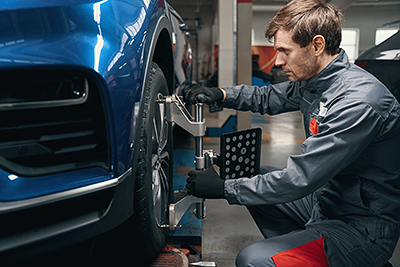
Drivers throughout Frederic, WI, can count on Larsen Auto Center for thorough brake inspections and service on all Chevrolet models. From pad and rotor replacement to brake fluid flushes and caliper repairs, the team is equipped to address every one of these Chevrolet brake service signs and get your vehicle back to stopping confidently. If anything on this list sounds familiar, schedule a service appointment at https://www.larsenauto.com/ before a small issue becomes a larger problem.
Conclusion
Brakes rarely fail without warning. Squealing, grinding, a soft pedal, pulling, vibration, and extended stopping distances are all Chevrolet brake service signs that your vehicle is telling you something needs attention. Catching these symptoms early protects you, your passengers, and your investment. When you notice any of them, reach out to Larsen Auto Center in Frederic, WI, and let a qualified technician take a look.